+44 7966 145 771
Body Camera Technology: A Professional Guide to Body-Worn Video
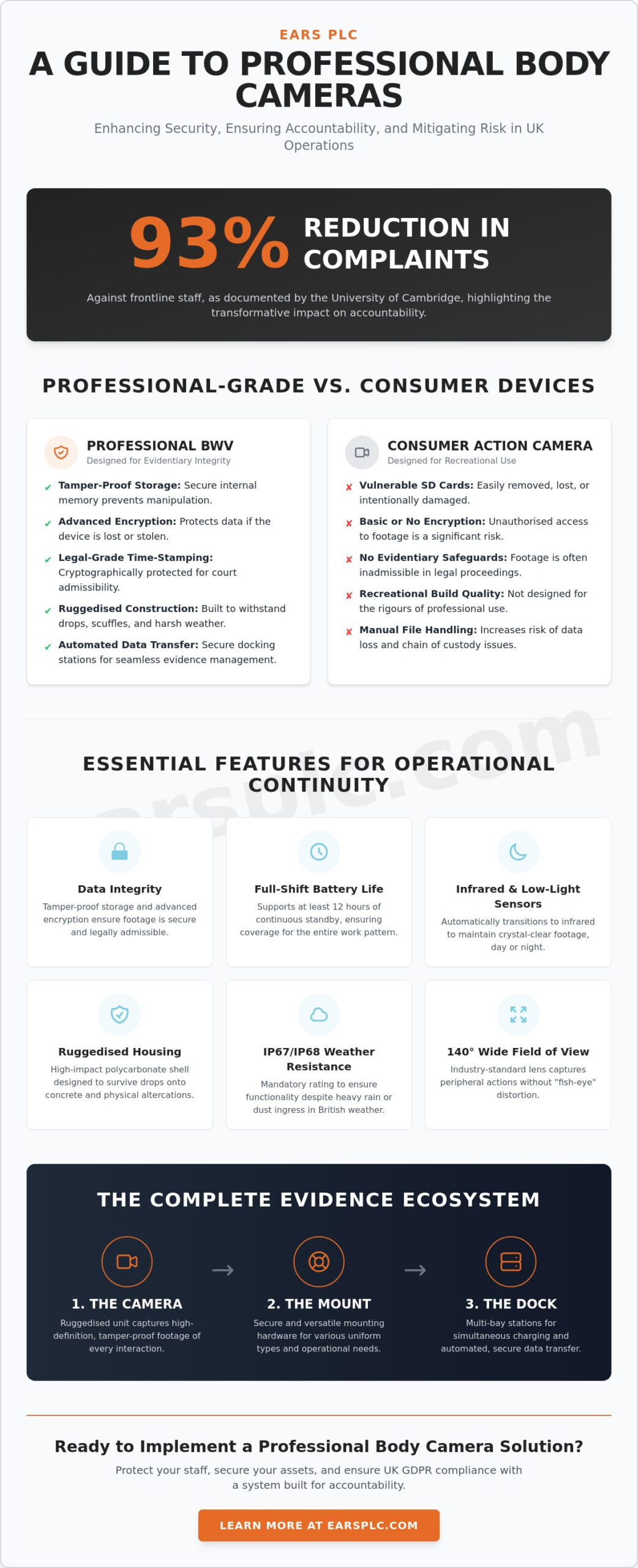
Could a 93% reduction in complaints against your frontline staff change the way you manage operational risk? This figure, documented by the University of Cambridge, highlights the transformative impact that a professional body camera system has on workplace safety and accountability. You likely recognise the pressure of rising workplace aggression and the technical difficulty of ensuring GDPR compliance whilst maintaining clear evidence for legal claims. It’s a complex environment where logistical stability is vital for protecting your personnel and your organisation’s reputation.
This guide explains how professional body cameras enhance security, ensure accountability, and integrate into modern communication networks. We will examine the latest technical capabilities, including LTE connectivity and de-escalation features, alongside the regulatory frameworks that govern data management. You’ll learn how to implement a structured, tamper-proof evidence system that aligns with your existing security infrastructure to provide long-term operational continuity and peace of mind.
Key Takeaways
- Distinguish between consumer action cameras and professional body camera systems designed for high-stakes evidentiary requirements.
- Identify the essential hardware features, such as infrared capabilities and wide-angle lenses, that ensure reliable performance during night-time operations.
- Examine the strategic use of body-worn video in retail and security sectors to deter antisocial behaviour and reduce stock shrinkage.
- Master the legal requirements of UK GDPR by understanding how to implement a robust Data Protection Impact Assessment for your organisation.
- Compare the long-term value of equipment ownership against the operational flexibility offered by professional hire services for specific events.
What is a Professional Body Camera (BWV)?
Body-worn video (BWV) is a professional-grade recording system designed specifically for frontline personnel. Unlike consumer devices, a professional body camera is engineered to withstand the physical rigours of security, retail, and facilities management environments while maintaining total data integrity. It serves as a neutral witness, capturing high-definition footage that provides an objective account of interactions between staff and the public. In modern UK business operations, these systems are no longer optional extras; they’re foundational tools for risk mitigation and staff protection.
A complete professional solution consists of three primary elements: the ruggedised camera unit, secure mounting hardware for various uniform types, and multi-bay docking stations. These docking stations are critical for logistical stability. They handle both the recharging of batteries and the automated, secure transfer of encrypted data to central management software. This process ensures the device is ready for the next shift without requiring manual file handling or technical intervention by the user.
Professional Standards vs Consumer Devices
While “action cams” are popular for recreation, they fail to meet the stringent requirements of professional liability and insurance. Professional systems prioritise security over aesthetics. They feature tamper-proof internal storage and advanced encryption that prevents unauthorised access to footage if a device is lost or stolen. Most importantly, professional units use cryptographically protected time-stamping. This feature is essential for legal admissibility in the UK, as it proves the footage hasn’t been edited or manipulated after the event. Without these safeguards, recorded evidence is often dismissed in legal or insurance proceedings.
The Evolution of Wearable Video in London
The adoption of wearable technology has moved far beyond law enforcement. In busy commercial hubs like Wembley or the high streets of Richmond, local businesses now use these tools as a standard part of their de-escalation strategy. Retailers and hospitality managers find that the presence of a visible body camera often modifies aggressive behaviour before an incident occurs. This shift has also led to the integration of video with traditional audio communication. Modern units often work alongside two-way radios, creating a unified network where a single press of a button can alert a control room whilst simultaneously beginning a secure recording. This integrated approach provides a higher level of operational continuity for teams working in high-pressure urban environments.
Essential Features of Professional Body-Worn Cameras
Selecting the right hardware requires a deep understanding of the specific environment where your team operates. A professional body camera must provide more than just a visual record; it must offer logistical stability through technical precision. When frontline staff face high-pressure situations, the equipment must function as a seamless extension of their uniform, requiring minimal intervention to produce high-quality, admissible evidence. Reliability in these moments is built upon a foundation of specific hardware standards that distinguish professional units from consumer-grade alternatives.
To ensure operational continuity across a standard UK work pattern, several core features are essential:
- Full-Shift Battery Life: Internal power management must support at least 12 hours of continuous standby with enough capacity for several hours of active recording.
- Infrared and Low-Light Sensors: Security operations often occur in poorly lit environments like car parks or nightclubs; sensors must automatically transition to infrared to maintain clarity.
- Ruggedised Housing: Professional units utilise high-impact polycarbonate shells designed to survive drops onto concrete and the physical strain of scuffles.
- Weather Resistance: Given the unpredictability of British weather, an IP67 or IP68 rating is mandatory to ensure the device remains functional despite heavy rain or dust ingress.
Optical Performance and Field of View
Optical clarity is about more than just high pixel counts. While 4K resolution offers incredible detail, it creates significant demands on storage capacity and data transfer speeds. Most professional organisations find that 1080p or 1440p provides the ideal balance of forensic detail and manageable file sizes. A 140-degree field of view has become the industry standard because it captures peripheral actions without the “fish-eye” distortion that can make distances difficult to judge in court. Additionally, the inclusion of pre-record and post-record buffers is a vital safety net. These buffers constantly cycle a short loop of video, ensuring that when a user presses the record button, the 30 seconds leading up to the incident are also captured. This context is often the difference between a contested claim and a clear-cut resolution.
Build Quality and Operational Reliability
In a tactical environment, simplicity is a safety feature. Professional body camera designs prioritise one-touch recording, usually via a large, tactile button that can be operated even whilst wearing gloves. This removes the need for the user to look down at the device, allowing them to maintain eye contact and focus on de-escalation. The internal architecture is equally robust, featuring hardware-level encryption that ensures data cannot be viewed or deleted directly from the device. If you are unsure which hardware specifications best suit your specific site requirements, you can contact our technical team for a detailed assessment of your operational needs. This methodical approach to equipment selection ensures that your investment provides long-term protection and reliable performance in any professional sector.
Strategic Applications Across UK Industries
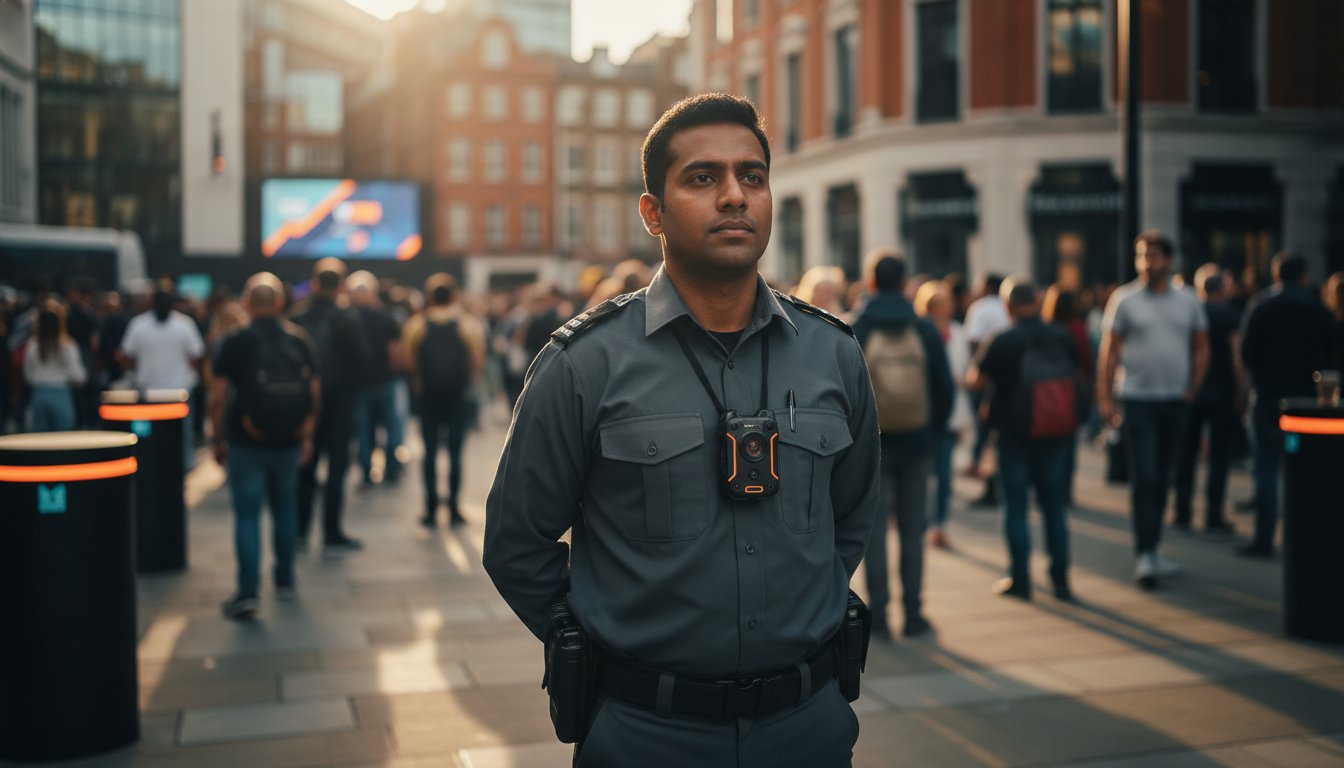
The operational deployment of body camera systems has expanded far beyond traditional law enforcement. In the current professional climate, various sectors utilise this technology to create a safer environment for staff and to ensure logistical stability. By providing a transparent record of events, businesses can mitigate the risks associated with workplace aggression and inconsistent evidence. Each industry faces unique challenges, yet the requirement for a dependable, high-quality recording remains a constant priority for management teams.
- Retail and Hospitality: High-street retailers in busy hubs like Kingston and Slough report significant success in deterring antisocial behaviour. Beyond staff protection, these devices help reduce “shrinkage” by discouraging shoplifting and providing clear evidence of theft.
- Private Security: In London’s densely populated commercial centres, security professionals use systems like the Hytera SC580 to professionalise their response. It ensures that every interaction is documented, protecting both the operative and the public from unfounded allegations.
- Healthcare and Education: Frontline staff in hospitals and schools increasingly face verbal and physical abuse. Wearable video acts as a deterrent, whilst providing a secure record of incidents that might otherwise be difficult to prove.
- Logistics and Facilities Management: These sectors use cameras to document health and safety compliance. Recording high-risk tasks or site inspections ensures that protocols are followed, providing a robust audit trail for insurance purposes.
De-escalation through Front-Facing Screens
One of the most effective psychological tools in modern security is the front-facing screen. When an individual sees their own reflection on a body camera in real-time, it often triggers an immediate change in their behaviour. This “mirror effect” encourages self-regulation, as the person becomes acutely aware that their actions are being recorded for potential legal review. In retail environments, this visual feedback often resolves confrontations without the need for physical intervention or police involvement, maintaining a calmer atmosphere for other customers and staff alike.
Evidence Gathering and Operational Accountability
Professional video systems serve as a neutral witness in complex liability disputes. For insurance claims, having a high-definition recording of an incident removes the ambiguity of conflicting accounts, often leading to faster settlements and reduced legal costs. Beyond external disputes, management teams use this footage for internal staff training and performance reviews. Analysing real-world interactions allows for the refinement of safety protocols and communication techniques. Additionally, when criminal activity occurs, providing high-quality, encrypted footage to the police significantly accelerates investigations, increasing the likelihood of a successful prosecution.
Navigating GDPR and Data Management
Compliance with UK GDPR is a cornerstone of any professional video surveillance strategy. Organisations must treat footage from a body camera as personal data, necessitating strict adherence to the Data Protection Act 2018. Before deploying any equipment, you must conduct a Data Protection Impact Assessment (DPIA). This document identifies potential privacy risks and outlines the specific measures your organisation will take to mitigate them. It’s a critical piece of your logistical framework that ensures your use of technology is both proportionate and legal.
Secure data management begins the moment a device is returned to its base. Professional docking stations are preferred over manual cloud uploads because they establish a secure, physical connection that minimises the risk of data interception. High-level encryption, such as AES-256, should be standard across your entire fleet. This ensures that sensitive footage remains inaccessible to unauthorised parties, even if a device is physically compromised in the field.
Digital Evidence Management Systems (DEMS)
A robust Digital Evidence Management System is essential for maintaining the chain of custody. It automatically logs every time a file is viewed, shared, or exported, creating an audit trail that is vital for legal admissibility. Modern DEMS also offer automated redaction tools. These allow your team to blur the faces of bystanders or unrelated third parties quickly, ensuring you remain compliant with privacy laws when sharing evidence with the police or legal counsel. Your retention policy should be equally disciplined; footage not required for evidence should be automatically deleted after a set period, typically 30 days, to avoid unnecessary data storage.
Staff Training and Privacy Policy
Success depends on clear operational policies and thorough staff training. Employees must understand exactly when to activate their body camera and, crucially, when to stop. Incident-based recording is the standard approach, as continuous recording often creates excessive data and significant privacy concerns. You must also satisfy public notification requirements by ensuring staff wear clear signage indicating that video and audio recording is in progress. Transparency with your team is just as important. Framing the technology as a tool for their own protection, rather than a means of surveillance, helps build trust and ensures the system is used correctly. If you require assistance in developing a GDPR-compliant deployment strategy, contact our specialist consultants for professional guidance.
Implementing a Body Camera Solution: Hire vs Purchase
Deciding between a capital purchase and a hire agreement is a strategic choice that impacts your organisation’s logistical stability. Whilst purchasing provides long-term asset ownership, it requires a committed approach to ongoing maintenance and software updates. Evaluating the total cost of ownership involves looking beyond the initial price of the body camera unit; you must also account for docking station infrastructure, secure data storage, and the specialised training required for your team. For many professional sectors, the choice depends on the predictability of their operational requirements and the need for financial flexibility.
Our experience shows that a tailored approach often yields the best results for business continuity. Whether you choose to own your fleet or utilise a managed service, the priority remains the same: ensuring that your frontline staff have dependable tools that function without fail in high-pressure environments. Reliability is built into every stage of our support process, from the initial site survey to long-term technical maintenance.
The Case for Body Camera Hire
For short-term London events or seasonal peaks in retail, hiring equipment often provides a more efficient logistical approach. It allows your team to access the latest high-definition technology without the burden of significant capital expenditure. Ears PLC’s managed hire service includes technical support, maintenance, and the necessary licensing, which removes the administrative weight from your internal teams. This model ensures that the equipment is always in peak condition and ready for immediate deployment, providing a level of operational continuity that’s difficult to maintain with older, owned assets.
Unified Communications: Cameras and Radios
A common oversight in security planning is the separation of video and voice systems. Leading manufacturers like Hytera and Motorola have developed integrated ecosystems where the body camera works in tandem with professional two-way radio networks. This integration allows for advanced features such as emergency button synchronisation, where activating a radio’s distress signal also triggers recording on the camera. Working with a single supplier for all communication needs simplifies your support structure and ensures that all hardware is fully compatible and optimised for your specific environment.
Our experienced team can help you navigate these technical choices to ensure your system meets the specific demands of your site. You can contact Ears PLC for a bespoke system design or a comprehensive site survey. This methodical approach ensures that your security infrastructure is both robust and scalable, providing a dependable foundation for your frontline personnel and long-term protection for your organisation.
Securing Your Operational Future with Professional Video
Implementing a professional recording system is a fundamental step toward safeguarding your personnel and ensuring long-term accountability. A high-quality body camera provides more than just a visual record; it offers a tamper-proof foundation for legal protection and insurance clarity. Success depends on the disciplined integration of rugged hardware with robust data management protocols that satisfy UK GDPR requirements. By prioritising these technical standards, you ensure your team remains protected whilst maintaining total operational continuity.
Since 1999, we’ve served London and the wider UK by providing dependable communication solutions that prioritise logistical stability. As an authorised Motorola, Hytera, and ICOM partner, we offer the technical expertise required for complex frequency planning and expert on-site support. Our methodical approach ensures your security infrastructure remains resilient against the evolving challenges of modern professional sectors.
Explore Professional Body Camera Solutions from Ears PLC to discuss a tailored system design or site survey for your organisation. We’re ready to help you establish a safer, more transparent environment for your frontline staff.
Frequently Asked Questions
Do I need a licence to use a body camera for my business in the UK?
Security professionals usually require a Public Space Surveillance (PSS) Licence from the Security Industry Authority (SIA) to operate these devices legally. This is particularly important if the footage is used to identify individuals or prevent crime. Business owners should also ensure they’ve completed a Data Protection Impact Assessment to remain compliant with UK GDPR requirements and maintain logistical stability within their operations.
How long does the battery last on a professional body camera?
A professional body camera is designed to last for a full 12-hour shift on a single charge. Whilst standby times can exceed this, active recording consumes more power. Most high-tier models are engineered for operational continuity, ensuring the device remains functional throughout long periods of frontline duty without needing a mid-shift recharge or battery swap.
Is body-worn video footage admissible in a UK court?
Body-worn video is fully admissible in UK courts as long as the chain of evidence remains intact. To meet legal standards, the footage must be encrypted at the point of capture and include a cryptographically protected time-stamp. Using a Digital Evidence Management System ensures that every time a file is accessed or exported, a secure audit trail is created for judicial review.
Can body cameras record audio as well as video?
Professional units record high-quality audio alongside video to provide a complete account of an interaction. This is vital for documenting verbal abuse or de-escalation attempts that video alone might miss. In the UK, you must ensure your privacy policy explicitly covers audio recording, as it’s considered more intrusive than video under current data protection legislation and requires clear notification.
How is data secured if the camera is lost or stolen?
If a device is lost or stolen, the data remains protected by advanced AES-256 encryption. Professional units don’t allow for the direct playback or deletion of files on the device itself. Footage can only be accessed and downloaded by authorised personnel using the specific management software linked to your organisation’s docking stations, rendering the data useless to any unauthorised parties.
What is the difference between a body camera and a CCTV system?
The primary difference is the perspective and mobility of the system. While CCTV provides a fixed, wide-angle view from a distance, a body camera offers a first-person account of an incident, including audio. This mobile perspective captures interactions that might occur in CCTV blind spots, providing a more detailed record of staff engagement and specific verbal exchanges in high-pressure environments.
Do I need to inform people that they are being recorded?
Yes, you’re legally required to inform individuals that recording is taking place to comply with UK privacy laws. This is typically achieved through clear, highly visible signage or stickers worn on the operative’s uniform. In many professional contexts, staff are also trained to provide a verbal warning before activating the record function to encourage immediate de-escalation of the situation.
Can body cameras be integrated with my existing two-way radios?
Modern systems are designed for seamless integration with professional two-way radio networks. Leading brands offer unified solutions where the camera can be triggered automatically by the radio’s emergency button. This creates a coordinated response where the control room is alerted whilst the camera simultaneously begins capturing evidence, ensuring total operational continuity during critical incidents and improving staff safety.